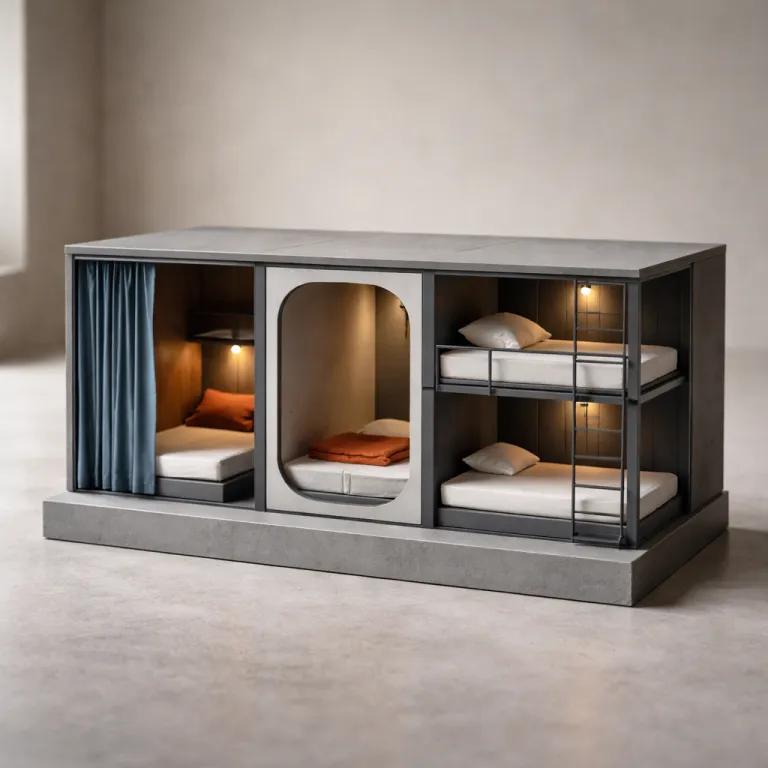
Reading hostel dorm types like a pro: pod, capsule, or bunk bed
The new generation of hostel dorm types asks you to choose how you want to sleep, not just where. A pod, a capsule, or a classic bunk bed each reshapes the shared sleeping space into a different kind of night, and the right choice depends on how you balance privacy, budget, and social energy. When you open a premium booking page for modern hostels, you are really choosing between three distinct room types that now rival compact hotel design.
Start with the classic bunk bed in a shared hostel room, usually arranged as four to twelve beds in simple dorm rooms. This format still delivers the lowest price per bed, and it remains the social default for travellers who want conversation more than quiet, especially in lively city centre hostels. When you see photos of metal frames stacked as single bunk or double beds in a compact room, you are looking at the backbone of the global hostel scene.
Pod and capsule formats shift the focus from open bunks to semi enclosed or fully enclosed bed capsule layouts. A pod dorm usually means a pod capsule built into a wall, with curtains, a reading light, and power outlets framing your bed sleeping zone. Capsule style goes further, with capsule beds or a full capsule bed module that feels closer to a compact capsule hotel than a traditional hostel bunk, especially in the most modern hostel concepts.
Inside the pod: semi private beds for modern hostel travellers
Pod dorms are the fastest growing hostel dorm format in European hostels, and they suit travellers who want privacy without losing the shared room buzz. A pod is usually a wooden or composite shell built around a single bunk, creating a cocooned sleeping space with a curtain instead of a door. On a premium booking site, look for terms like pod hostels, pod dorms, or semi private pods in the room description.
Each pod typically includes a standard bed or compact bunk bed, a shelf, a reading light, and at least one power outlet, sometimes two or three for multiple devices. The best pod hostels also integrate ventilation grills and sound dampening panels, which matter more than décor when thirty pods share one hostel room. When you compare pod rooms on a luxury oriented platform, check whether the beds are arranged as a single row or stacked as a type bunk tower, because that affects both noise and airflow.
Pod layouts often come in mixed and female only dorm rooms, with a small price difference that reflects demand rather than any change in the actual bed capsule design. Female only pod rooms tend to sell out first in major cities, so customers who prioritise that option should book in advance rather than in last minute order. For travellers who usually choose luxury youth hostels redefining premium stays, pod dorms often feel like the natural bridge between a classic hostel bunk and a compact capsule hotel experience.
Capsule beds and capsule hotels: maximum privacy in shared rooms
Capsule style hostel dorm types take the pod idea and seal it, turning your bed into a small, enclosed module with a door or blind. In many Asian cities, capsule hotels pioneered this format in the late 1970s, and modern hostels now borrow the same capsule beds while keeping shared bathrooms and social lounges. When you see the term capsule hotel or capsule style dorm on a booking page, expect a fully framed capsule bed with a solid wall on at least three sides.
These capsule beds usually offer more sound insulation than a pod, plus integrated lighting, USB ports, and sometimes a small control panel for fan speed and dimmers. Some capsule hotels and capsule style rooms even offer double beds inside a larger module, effectively creating compact private rooms within a shared hostel room. For solo travellers, the standard single bunk sized capsule feels like a personal cabin, while couples might seek a rare capsule with a compact double layout.
Capsule formats suit travellers who treat the dorm purely as a sleeping zone and rely on common areas for social contact. If you are noise sensitive, a capsule bed in a quiet wing of a modern hostel can rival a budget hotel bunk room for rest, especially when the property enforces a strict lights out policy. When comparing capsule hotels and pod hostels, remember that the more enclosed the space, the more crucial good ventilation becomes, so always read recent reviews about airflow and temperature before you place your booking order.
Classic bunk beds and modern hostel layouts: when social energy matters most
Classic bunk beds remain the backbone of many hostels, especially where price and social contact outrank privacy. A standard bunk bed dorm usually means metal or wooden frames arranged as a single bunk or stacked beds three high in some older properties, though premium hostels rarely go beyond two levels. When you browse a modern booking site, you will often see these listed simply as shared dorm rooms with eight, ten, or twelve beds.
The advantage is straightforward; you pay less per bed and gain more spontaneous conversation, because there is no curtain or capsule wall between you and the rest of the room. For many solo travellers, this is still the best value hostel dorm option, especially in cities where a basic hostel bunk costs a fraction of a central hotel. If you are weighing a classic dorm against private rooms, read this real cost breakdown for private room or dorm bookings to understand how much you actually save per night.
Modern hostel design has refined the classic dorm by adding privacy panels, individual reading lights, and lockers large enough for full sized luggage. Some properties now label their layouts as a specific type bunk configuration, such as four bed pods or six bed sleeping clusters, to signal a more thoughtful use of space. When you see a modern hostel promoting designer hostel bunk frames and integrated storage, you are looking at the evolution of the simple bunk bed into a more curated, premium dorm experience.
Female only vs mixed dorm rooms: safety, pricing, and smart booking order
Choosing between female only and mixed dorm rooms is less about the bed itself and more about how you want the room to feel. Most modern hostels now offer at least one female only hostel room, often in pod or capsule formats that add another layer of privacy. These women only options tend to be in higher demand, especially in major transit cities and beach destinations.
Prices for female only rooms are often slightly higher than mixed dorms, reflecting demand and limited inventory rather than any difference in mattress quality or capsule beds hardware. When you place your booking order on a premium platform, check how many beds are in each female only room type, because a four bed capsule layout feels very different from a twelve bed classic hostel bunk dorm. If you are sensitive to noise, a smaller female only pod or capsule room will usually be quieter than a large mixed hotel bunk style dorm.
Safety features matter across all formats, so look for lockable private lockers, keycard access to floors, and staffed reception rather than just the label on the bed capsule. Many pod hostels and capsule hotels now position their female only rooms closer to reception or on dedicated floors, which can make late night sleeping arrivals feel more comfortable. For solo travellers, the smartest strategy is to decide first whether you want a female only or mixed environment, then choose between pod, capsule, or classic bunk within that category instead of treating all room types as equal.
What to check before you book: dimensions, lockers, outlets, and ventilation
On a luxury and premium booking website, the photos of hostel dorm types layouts always look polished, but the details behind the lens determine how well you actually sleep. Start with bed dimensions; tall travellers should confirm the length of bunks and capsule beds, because some older hostels still use shorter frames that leave feet hanging. If you are booking a single bunk in a capsule hotel style dorm, check whether the capsule is fully enclosed or just a deep pod with a curtain.
Lockers are the second non negotiable detail, especially in larger dorm rooms where customers come and go at all hours. Look for photos or descriptions that show lockers large enough for a full backpack or cabin suitcase, ideally under the bunk bed or built into the pod capsule structure. When a modern hostel invests in integrated storage, it usually signals a more thoughtful approach to space planning and guest flow.
Power outlets and ventilation complete the checklist, because a beautiful capsule bed without fresh air or charging points quickly becomes frustrating. The most reliable way to judge these details is to read recent reviews on hostel booking websites and travel forums, where travellers comment on noise, airflow, and whether there are enough outlets for all beds. As one verified answer from a trusted platform puts it, “A pod dorm features individual sleeping pods offering privacy within a shared room.”
Matching your sleep priorities to the right modern hostel concept
Choosing between pod, capsule, and classic bunk is really about ranking your own priorities rather than chasing the newest hostel dorm types trend. If you want maximum privacy at a lower cost than a full private room, a capsule bed in a capsule hotel style dorm will usually serve you better than any open bunk bed. Travellers who care more about social energy than silence will still feel at home in classic hostel bunk layouts with eight or more beds per room.
Pod hostels sit in the middle, offering semi private pods that soften the edges of shared sleeping without isolating you completely. These modern hostel concepts often combine pod dorms with a small number of private rooms, giving returning customers the option to move between formats on different trips. If you are curious about how personality driven properties are reshaping the market, read this feature on why generic hostels are losing to character rich stays.
When you compare options, remember that the average cost of a hostel dorm bed globally still hovers around the price of a casual restaurant meal, while pod and capsule formats add a modest premium for extra privacy. Data from specialist platforms shows that roughly a quarter of hostels now offer pod style dorms, and that share is rising as more properties upgrade from basic hotel bunk style frames to integrated pod capsule systems. For solo explorers, the smartest move is to decide how you want to feel when you close your curtain at night, then let that answer guide whether you book a classic bunk, a pod, or a capsule bed.
Key figures shaping the new hostel dorm landscape
- The global average cost of a hostel dorm bed is often around 30 USD per night, based on HostelWorld’s recent trend reports, which keeps shared rooms significantly cheaper than most entry level hotel options in major cities.
- Roughly 25% of hostels now offer pod style dorms, according to HostelGeeks data published in 2022, showing how quickly pod hostels and capsule style layouts are moving from niche to mainstream.
- Industry timelines from major booking platforms indicate that traditional bunk dorms remained dominant until very recently, while pod and capsule formats have accelerated in the last few seasons as travellers demand more privacy.
- HostelWorld and similar partners report that informed selection between pod, capsule, and classic bunk formats leads to higher guest satisfaction scores, confirming that matching dorm type to sleep priorities improves overall travel experiences.
FAQ about pod, capsule, and bunk hostel dorms
What is a pod dorm in a modern hostel ?
A pod dorm is a shared hostel room where each bed sits inside a semi enclosed pod structure with a curtain, personal light, and usually a power outlet. It offers more privacy than a classic bunk bed while keeping the social feel of shared dorm rooms. Pod hostels use this format to balance comfort, price, and community for solo travellers.
How does a capsule dorm differ from a pod dorm ?
Capsule dorms use fully enclosed capsule beds or modules, often inspired by Japanese capsule hotels, while pod dorms rely on open sided pods with curtains. As one verified explanation states, “Capsule dorms are similar to pod dorms, often used interchangeably, both providing private sleeping spaces.” In practice, capsules usually offer better sound insulation and a more private sleeping space than pods.
Are classic bunk dorms still common in quality hostels ?
Yes, classic bunk beds remain widespread, especially in budget focused hostels and social oriented properties. A trusted summary confirms that “Yes, classic bunk dorms remain prevalent, especially in traditional hostels.” Many modern hostel designs now refine this format with privacy panels, better mattresses, and integrated lockers.
Which dorm type is best for light sleepers ?
Light sleepers usually rest better in capsule beds or high quality pod capsules, because the enclosed design blocks more light and softens noise. When choosing between different hostel dorm options, look for reviews mentioning quiet floors, good ventilation, and strict noise policies. Classic bunk dorms can still work if the room is small, the beds are sturdy, and the hostel enforces a clear lights out time.
How should I research and compare dorm options before booking ?
The most effective approach is to research hostels online, read recent reviews, and compare amenities such as lockers, Wi Fi, outlets, and bed dimensions. Use hostel booking websites, travel forums, and specialist review platforms to see how other travellers rate pod hostels, capsule hotels, and classic bunk dorms. This method helps you select the dorm type that best matches your budget, privacy needs, and preferred social atmosphere.